SELECTED WORK / K&N ENGINEERING

Growing beyond an enthusiast brand.

BoostedGroup helped K&N evolve from a product-driven automotive-parts company into a broader consumer performance brand while preserving the technical credibility and enthusiast loyalty that had made it successful in the first place.

RELATIONSHIPConsulting engagement to Director of Brand Marketing
RETURNLater anchor client of BoostedGroup
SCOPEOrganization, positioning, creative, packaging, campaigns
K&N Performance Air Intake System packaging
THE INFLECTION POINT

The product was already differentiated. The market strategy surrounding it had not yet caught up.

K&N had built a substantial business around a genuinely differentiated product: a washable, reusable air filter designed to last for the life of a vehicle.

The brand was well known among automotive enthusiasts and do-it-yourself customers, but its marketing remained concentrated largely within the same specialty channels and endemic media that had supported its early growth. Much of the strategy mirrored the companies selling disposable paper filters, even though the economics and consumer proposition of the K&N product were fundamentally different.

A conventional paper filter had to be replaced repeatedly. A K&N filter was generally purchased once for a vehicle and then cleaned and reused. That created a longer replacement cycle, but it also opened a much larger opportunity.

The product could appeal not only to enthusiasts seeking additional performance, but also to ordinary drivers interested in convenience, long-term cost savings, reduced waste, and avoiding recurring filter replacements during routine service.

THE CHALLENGE

K&N needed to broaden the meaning of the brand without diluting it.

K&N's new chief executive wanted to move the company from a product-led organization toward a brand-led one and establish K&N as a name that could extend beyond the specialty automotive aisle.

That expansion had to be managed carefully. The company could not pursue a broader audience by abandoning the enthusiasts who had built the brand. Its technical credibility, motorsports heritage, and connection to performance culture remained essential assets. The opportunity was to broaden the meaning of K&N without diluting it.

Internally, the company also needed a different marketing model. The organization had become large and fragmented, with extensive dependence on outside agencies even though talented designers, filmmakers, and other creative resources already existed within the business. Media spending remained heavily concentrated on existing customers, global opportunities received inconsistent support, and the brand lacked a unified platform across advertising, packaging, retail, digital, partnerships, and communications.

30 → 6The recommended operating model concentrated the marketing organization around a focused core team.
In-houseExisting design and production talent became the foundation of a faster internal creative engine.
Broader marketMedia, retail, partnerships, and consumer messaging expanded beyond endemic enthusiast channels.
THE INITIAL ENGAGEMENT

The relationship began with an organizational and commercialization assignment reporting directly to the chief executive.

The mandate was to assess the marketing organization, identify the capabilities worth preserving, and build a smaller and more effective team around the company's strongest internal talent.

The recommended model reduced the marketing organization from approximately 30 people to a core team of six, ended the company's dependence on its primary advertising agency, and redirected resources toward an in-house creative and production capability.

That structure allowed K&N to produce timely, brand-consistent work across print, television, video, digital media, packaging, retail, and international markets with far greater speed and control.

The consulting assignment subsequently expanded into a full-time role, with David Vespremi joining K&N as Director of Brand Marketing.
REPOSITIONING THE BRAND

The strategy exposed the broader relevance already inherent in the product.

The strategy was not to turn K&N into a generic consumer brand. It was to expose the broader relevance already inherent in the product.

K&N could continue speaking to the performance enthusiast while also introducing a different proposition to drivers who did not work on their own cars. For that audience, the value lay in purchasing a filter once, avoiding repeated replacement costs, reducing material waste, and gaining the potential performance benefits associated with improved airflow.

The broader platform positioned K&N around enduring performance rather than a single replacement part.

Marketing expanded beyond automotive publications and specialty retailers into national television, roadside advertising, digital media, consumer publications, and broader retail environments. K&N entered outlets including Walmart and Best Buy while continuing to invest in racing, sports marketing, enthusiast events, and product development.

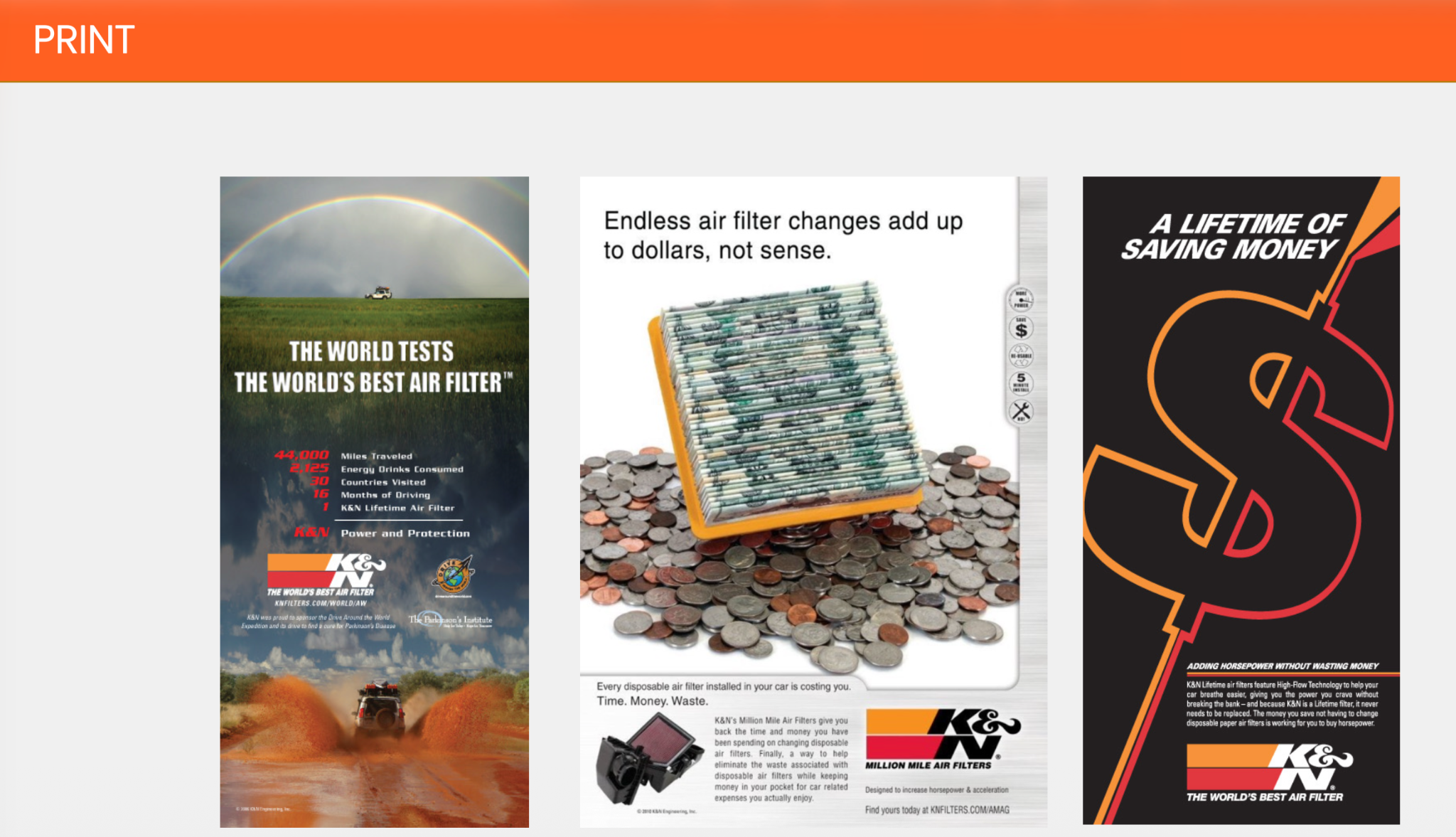
K&N print advertising showing global durability, lifetime savings and reusable filter value
BUILDING AN INTERNAL CREATIVE ENGINE

Creative capability moved closer to the product, the customer, and the culture surrounding the brand.

A central part of the transformation involved bringing creative capability closer to the business.

K&N developed its own production resources so that the company could generate original print, video, digital, retail, and international work without routing every assignment through an outside agency.

This did more than reduce dependency and cost. It allowed the work to be informed by people who understood the product, the engineering, the customer, and the culture surrounding the brand.

The resulting platform combined national advertising and mainstream distribution with deeper enthusiast engagement. K&N could broaden its reach while producing more content for the audiences that already cared most about the company.

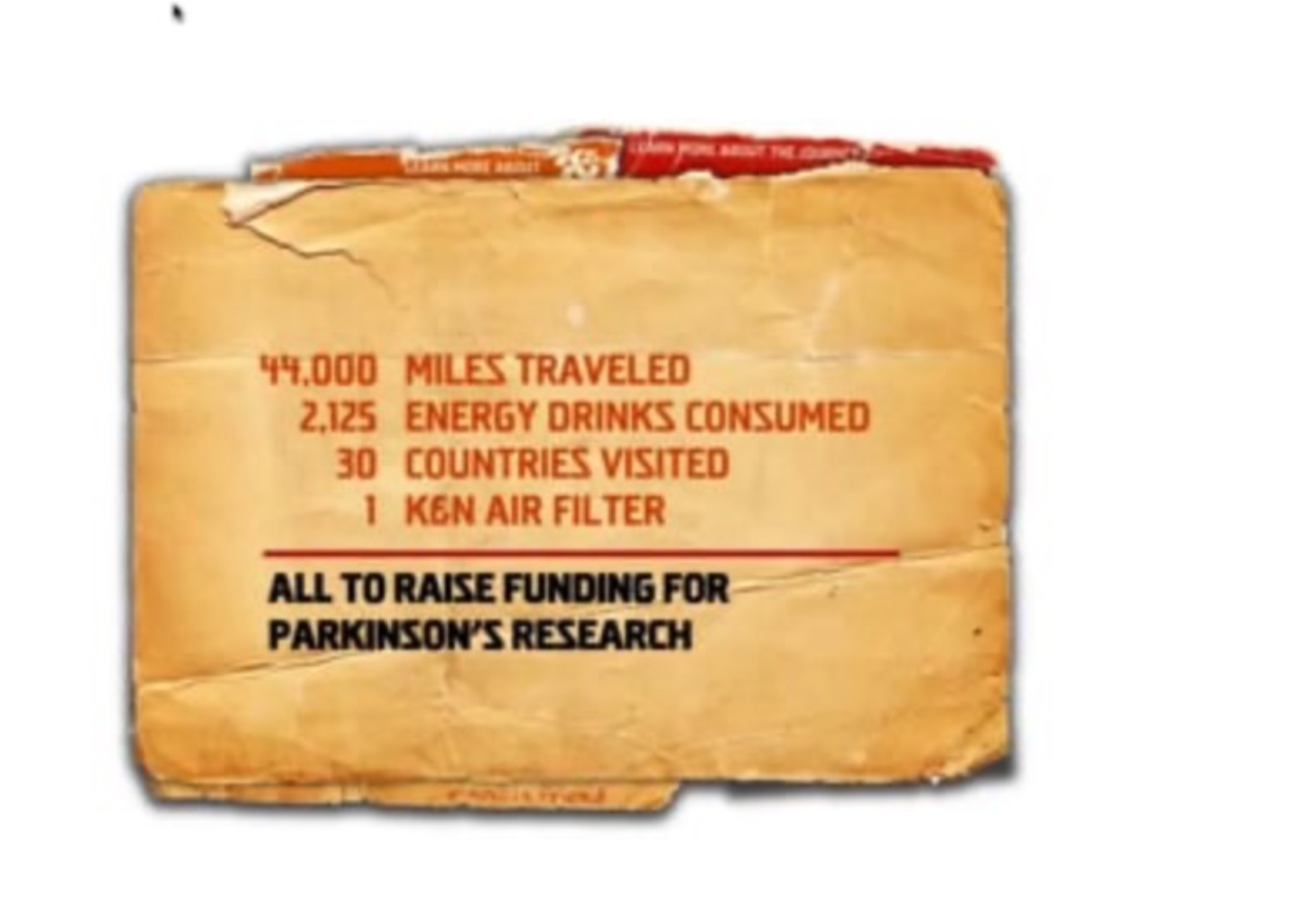
44,000-mile global expedition using one K&N air filter to raise money for Parkinson's research

The world tested the world's best air filter.

A team of Land Rovers traveled 44,000 miles through 30 countries without a filter change while raising money for Parkinson's research. The program turned durability and reuse into a story people could understand immediately.

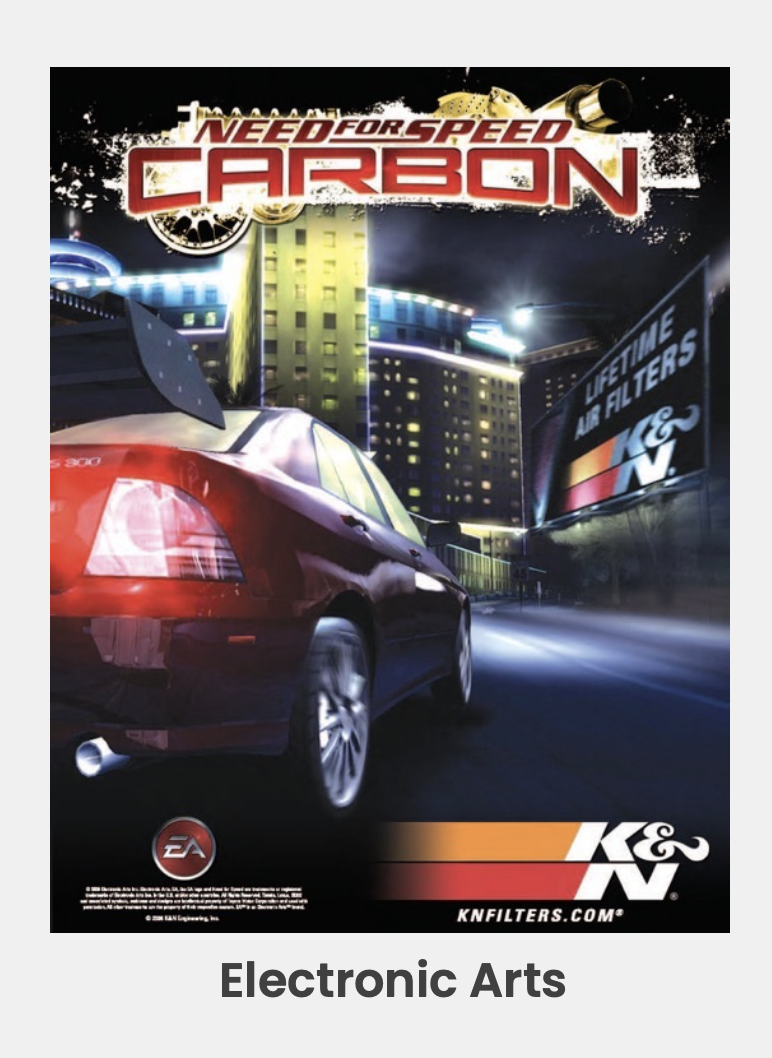
K&N and Electronic Arts Need for Speed Carbon partnership creative

Entering new cultural channels.

Licensing and product-integration agreements with Electronic Arts, Microsoft, and entertainment partners extended K&N's visibility beyond traditional automotive media and introduced the brand to new audiences without abandoning its performance roots.

TURNING PRODUCT PROOF INTO STORIES

The most persuasive campaigns began with evidence that already existed inside the customer community.

One customer had driven a three-quarter-ton General Motors pickup more than one million miles on its original engine while using the same K&N filter. The company marked the achievement by giving him a new truck and building national television and print work around the story.

Another program followed the global Land Rover expedition featured above. The journey connected the product's longevity with a cause and transformed an abstract durability claim into a tangible test conducted across 44,000 miles and 30 countries.

These were not manufactured brand claims. They translated durability, reusability, and customer loyalty into stories that made the product proposition clear to a much broader audience.

Black K&N Performance Air Intake System packaging
PACKAGING ACROSS BOTH CHAPTERS

Going Black improved shelf visibility without discarding the identity customers already recognized.

Packaging work spanned both the in-house leadership period and the later BoostedGroup engagement.

K&N's traditional packaging used a red background similar to the red and orange colors within its logo, causing the mark to recede rather than stand out. The redesign moved the package to black, increased the prominence of the logo, and created a more aggressive and distinctive presentation.

The result preserved the familiar K&N identity while giving it greater contrast, shelf presence, and flexibility across an expanding product portfolio.

Packaging systems
Retail presentation
Brand architecture
Visual identity
Campaign development
Strategic communications

The relationship continued after the full-time operating role.

After leaving K&N and returning to the Bay Area, David was invited back to support the company as an independent consultant. The renewed engagement became an anchor relationship as the broader BoostedGroup client portfolio developed, extending the work into new packaging, campaigns, strategic communications, and brand storytelling.

DUST TO DUST

A final film told a part of the K&N story that conventional advertising had never fully captured.

As K&N was changing ownership, the company's departing chief executive had collected a series of handwritten notes reflecting his beliefs about manufacturing, work, responsibility, and the company he had helped rebuild.

BoostedGroup developed those fragments into Dust to Dust, a film examining K&N through the people, machinery, and manufacturing culture behind the brand. The visual approach allowed the executive's original words to appear throughout the film without being rewritten or softened.

The result served as both an expression of American manufacturing and a closing statement for an important chapter in K&N's history. The film later received an AIDA Award.

Dust to Dust - a BoostedGroup profile of K&N's American manufacturing story.
THE IMPACT

K&N emerged with a broader footprint, stronger internal capabilities, and a platform that could reach beyond the specialty aisle.

K&N expanded into mainstream retail and consumer media while continuing to strengthen its standing among performance enthusiasts. It developed new licensing, entertainment, and partnership channels, invested more deliberately in international markets, and became far less dependent on outside agencies for day-to-day creative work.

Most importantly, the broader positioning was grounded in the actual product proposition. K&N did not need to manufacture a new reason to matter. It needed to explain more clearly why a reusable performance filter had relevance far beyond the people already shopping in the automotive-parts aisle.

MARKET EXPANSION

Greater relevance beyond the traditional enthusiast audience.

INTERNAL CAPABILITY

A faster, more unified creative and production engine.

RETAIL & CULTURE

Broader distribution, media, licensing, and entertainment channels.

RECOGNITION

Dust to Dust received an AIDA Award.

WHY IT MATTERS

Established companies do not always have to choose between their core audience and a broader market.

K&N demonstrated that the two can reinforce one another.

The company could speak to convenience, durability, long-term value, and reduced waste without abandoning performance. It could enter mainstream retail and consumer media while continuing to invest in racing, enthusiast culture, and technical credibility.

The opportunity was not to leave the existing category behind. It was to recognize that the brand had always represented something larger than the category had allowed it to express.

Case-study images are drawn from original K&N campaign and packaging materials supplied for review.